Before I start this post, let me say that I am not completely against preschool. Many parents have great experiences with preschool for their children. I’ve worked with some transitional kindergarten teachers who are AMAZING. They are the type of people who seem to have a calling to work with this age group and they do an outstanding job. Preschool wouldn’t be my first choice if I had a 4 year old right now, but if I was in a situation where I needed to work and needed care for a four year old, I would be OK placing my child in the care of those outstanding TK teachers. And if your child is in preschool or TK and it’s working out for you and your child, that’s great! The tricky part for me is when we get into public policy.
Transitional Kindergarten (TK) is taking off here in California. Zohran Mamdani has been trying to implement an expansion of universal pre-K in New York City to two year olds (TK and a version for three year olds seems to already be available) (New York State, 2026). TK is now available in California as a grade in public school free of charge. Preschool in general has been on the rise since 1980 (Meloy, et al. 2018), spurred by glowing reports about the outstanding outcomes for children.The reasons cited for it— higher IQs, higher rates of graduation and college, higher rates of employment, lower crime, lower teen pregnancy rates, lower use of public assistance— all sound great. Except that statistics show something different. And that’s where good intentions need to meet good research methodology.
Studies and What They Show– and What They Don’t
There are two levels to look at with the research on preschool. One is the two touchstone studies that laid the foundation for publicly funded preschool and the second is more recent research. The two studies that started the push for publicly funded preschool are the Perry Preschool study, which was conducted from 1962-1967, and the Abecedarian Project, which was initiated in 1972. Both studies followed children from very young ages until they were adults. Since then there have been several other studies that have touted the benefits of preschool and a few that have shown problems with universal preschool. The outcomes for the Perry Preschool and Abecedarian project were impressive and the financial savings to taxpayers were calculated to be likewise impressive– which is often cited as why universal preschool will work wonders for the country and save taxpayers enormous amounts of money. When preschool expansion advocates cite these two landmark preschool studies though, few people fail to ask a fundamental question: what kind of preschool program were the children in these studies attending? This question is largely brushed off as unimportant because “preschool is preschool”. How could preschool be any different in these studies than preschool now? And what impact would any differences make? Well, it turns out there are a lot of differences between the Perry Preschool and Abecedarian Project studies and the current implementation of public preschool and those differences create a big impact.
What was Preschool Like in the Perry and Abecedarian Projects?
Perry Preschool Project started in 1962 in Chicago. Participants were 123 Black 3 and 4 year olds from at-risk backgrounds. 58 were assigned to the preschool program and the remaining 65 were a control group that did not. The preschool program itself consisted of 2.5 hours a day of attendance Monday through Friday for two years with a ratio of one teacher to every five or six students (Wilson, 2000). In addition to attendance at the preschool, teachers would do home visits to each child once a week. These home visits were like one-on-one field trips where the teacher would take the child to places in the community like stores, banks, restaurants, parades, high schools or universities, fire stations, airports, bowling, etc. (Wakabayashi et al., 2024). In addition to the preschool attendance and field trips, there were monthly small group meetings with other parents facilitated by staff (Parks, 2000).
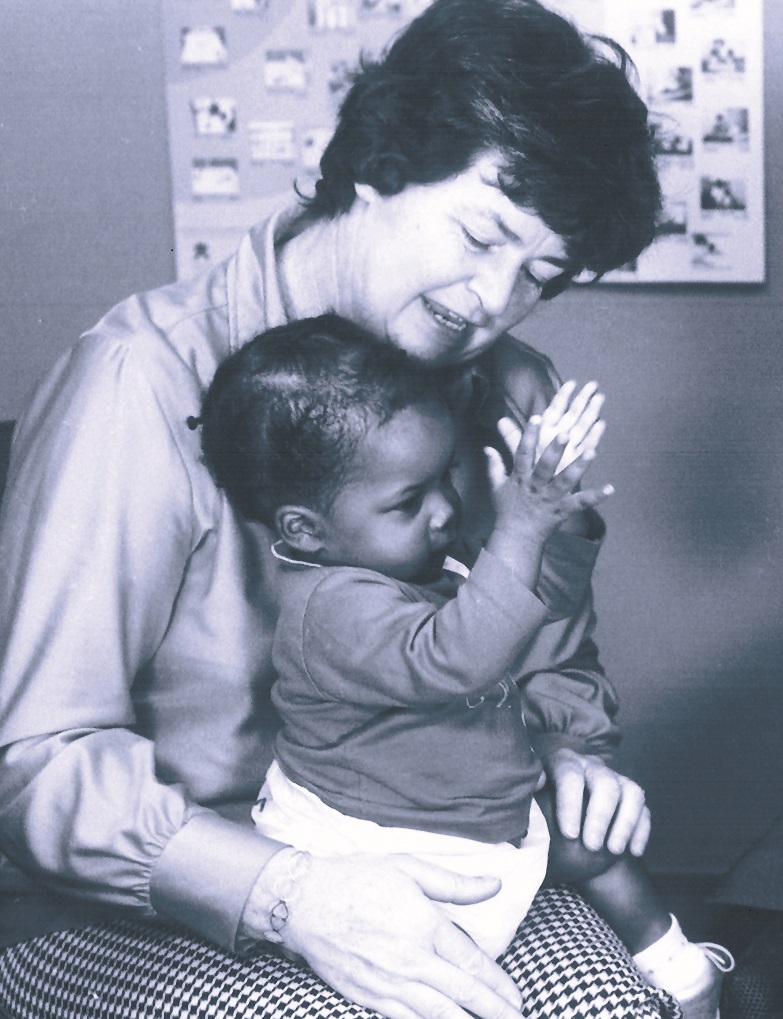
Abecedarian Project was similar to the Perry Preschool Project, but went even further. It lasted from 1972 to 1977 in Chapel Hill, North Carolina serving disadvantaged Black children and families in the area. The project had four cohorts of a total of 111 children who were randomly assigned to either the preschool program, or to receive free formula, diapers and childcare (Frank Porter Graham Child Development Institute, 2026). The Abecedarian Project provided a full day (up to 10 hours) of childcare from birth to age 5 at a single location for 50 weeks of the year. Children were able to attend even when sick and many of them received their medical primarily at the Abecedarian site. Class sizes were very small with low teacher to child ratios: 1:3 for infants, 1:4 for toddlers, and 1:6 for ages 3-4. It had a very high quality curriculum that was designed and conducted by a large team of multidisciplinary team of investigators with a high degree of individualization for the students. Transportation to and from the Abecedarian center was also provided by the program. There were also parent support meetings, special topic sessions and parent-teacher meetings and a book and toy lending library (Driessen, 2024). This was a very specialized, intensive, and highly controlled program!

In both the Perry and Abecedarian, the preschool group participants were tracked into middle age and had significantly better outcomes for school completion, crime, employment and welfare receipt than the control group. And so, the Perry and Abecedarian projects have been held up as proof that preschool, especially government sponsored, universal programs, will lead to reduced crime, reduced use of government assistance and a happier, more educated generation of young people with good jobs.
You might be noticing (and rightly so) that the Perry Preschool Project and Abecedarian Project don’t bear much of a resemblance to your local public preschool program! In California, for example, a TK class has one teacher and one aide for a 1:10 adult to child ratio (20 students max in a class). The schedule is the same as the kindergarten through 5th or 6th grade classes at the elementary school and how the teacher chooses to run the class varies greatly. I have seen some teachers who put on videos for most of the day and others who have well planned, highly enriching lessons. Most of the parent and teacher interaction will take place at parent teacher conferences. So what does the research say about the kinds of public preschool programs that are the standard right now?
Recent Preschool Research
When we are talking about whether or not to implement a government funded public preschool program, we are talking about whether there are more benefits to attending a six hour, 180-ish days a year preschool program for four year olds, maybe three year olds, depending on the particular program, versus what families were doing without preschool, which is children staying home with a parent or other family member or going to daycare. We are talking about an enormous number of variables here. Some kids adapt to school and preschool better than others, some families have more stability at home than others, some preschool programs are more structured and enriched, some daycares are lousy and some are good, some teachers are better at teaching preschool than others. You can start moving the parts around in all of those and come up with different outcomes, however we can notice some trends based on research. But there is one big drawback with most of the recent preschool research: it isn’t actually comparing kids who attend preschool with those who don’t attend preschool.
How could such a thing be happening? What are they comparing then? Well, let me explain a bit. I found a BIG 2018 document from the Learning Policy Institute by Meloy, Gardner and Darling-Hammon Institute summarizing a TON of preschool studies from a preschool’s website. As I started going through the different studies in this document, I noticed over and over and over again that most of the studies were comparing children who started preschool at the beginning of the school year and children who started preschool at the middle of the school year. They weren’t using a test group who receives the intervention (in this case preschool) and a control group who doesn’t receive the intervention (in this case children who don’t go to preschool at all before attending kindergarten). So we’re not getting research about what happens to kids who attend and don’t attend preschool, we’re getting research about children who start preschool earlier because they are older and children who start preschool later because they are younger. And even then, the gains that children who started earlier had over the children who started later diminish over the years. How do the outcomes for the preschool kids in these studies stack up against kids who stayed home or went to daycare? We don’t know. That wasn’t studied. (Take note, this isn’t the first time I have seen this “trick” used in research studies on things for children. Researchers will sometimes claim that they are studying the effects of an intervention between children who don’t receive an intervention and children who do, but when you read the study, you find that the children who “didn’t” receive the intervention are actually children who did receive the intervention, but just received it later. It is a way to “massage” the data and ensure the study gives you the results that you want.)
The studies in the Learning Policy Institute’s document that seem to get the closest to comparing children who attend a publicly funded preschool and those who don’t are the studies and follow ups on the Head Start program and the Tennessee Voluntary Pre-K program. The Head Start program studies (the originals of which were not readily available or proved to be impossible for me to track down) compared children across the country who attended Head Start with those in a control group. In at least one long term follow up, the control group consisted of siblings of Head Start attendees who did not go to Head Start. The results were mixed. Though there were some initial gains in kindergarten, academic gains diminished later on. One study found that parents were more likely to report positive evaluations of their Head Start child’s behavior while teachers were more likely to report negative evaluations of a Head Start child’s behavior. One study found that the positive effects were most pronounced for the children from the most disadvantaged backgrounds and the long term sibling study didn’t report significant academic gains long term, but found that Head Start children were more likely to have higher scores on the Long Term Index as adults, meaning lower rates of crime and teen parenthood and higher rates of high school completion and college attendance. So there were some positive gains, though not anything dramatic and the academic and cognitive gains were not long lasting. However, the relatively modest gains of Head Start pale in comparison to the negative impacts that Tennessee Voluntary Pre-K program found.
The Tennessee Voluntary Pre-K program is probably the closest thing to the universal TK that California just implemented and New York City has. It was added as basically another grade in the public school system and delivered mostly through school districts. Test group children went to the Voluntary Pre-K program and controls were randomly placed on waiting lists. The control group was carefully tracked in this one, which gives make it a very high quality comparison. Of the control group, 63% received home based care, 13% enrolled in Head Start, 16% attended day care centers, and 5% received a combination of daycare center and home based care. While the Voluntary Pre-K kids had good gains when tested during the preschool year, those gains started wearing off in kindergarten and by third grade, there were no significant gains on academic, social-emotional or behavioral measures. In first grade, the children who went to Voluntary Pre-K were more likely to have negative feelings about school than the children in the control group who mostly stayed at home or went to daycare centers. In short, the Tennessee Voluntary Pre-K program failed to deliver any large scale benefit over keeping a child home or sending them to daycare at age 4. Ouch. It might be time to face the fact that many four year olds are not ready for a six hour academic preschool program, especially in public schools that don't have the facilities that some private preschools do to make the program more play based and more comfortable for younger children.
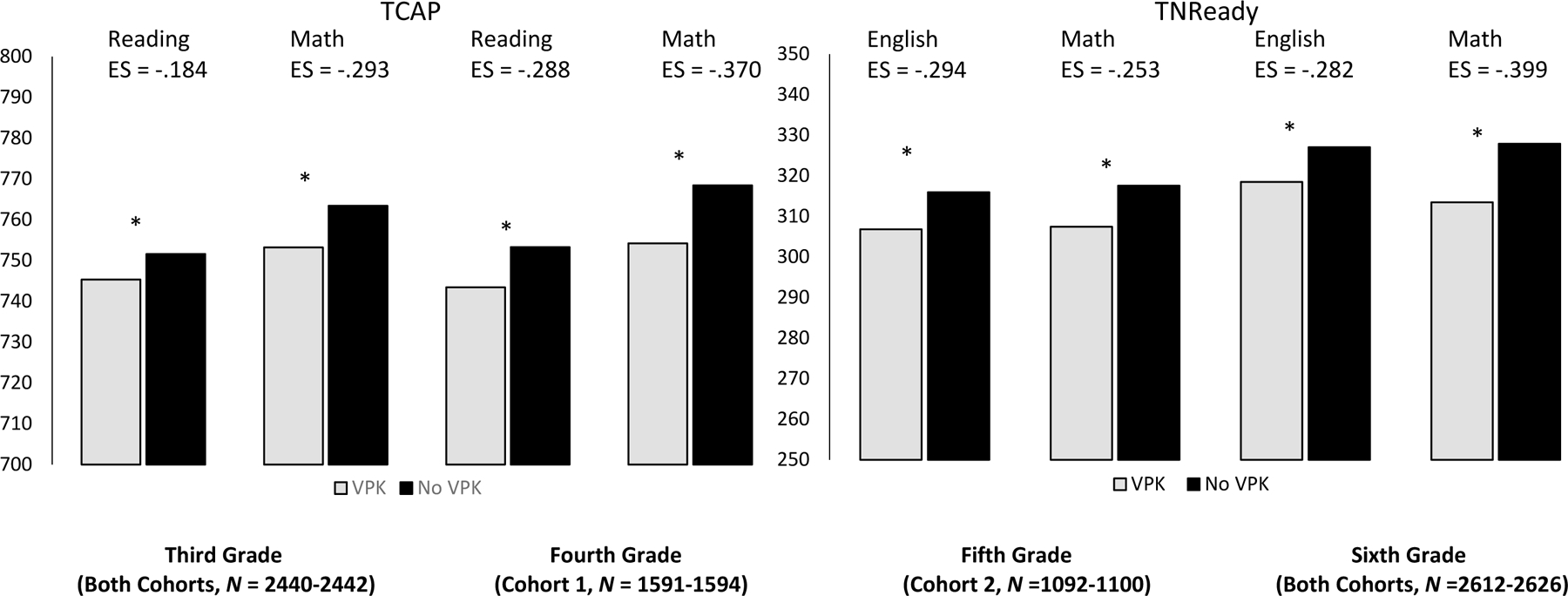
If we want to know what universal preschool will be like for our communities and schools we need to compare it with what realistically the program will be like and what it’s alternatives are. That’s transferability, a term in research methodology meaning that the research transfers from the study into other settings . And we need to make sure that the findings of a study are generalizable, meaning they would be seen in a general population and not just the study group (Barnes, et al., 2004). When we examine the Perry Preschool Project and the Abecedarian Project, we can see that these are not the type of preschools that are going to be available for TK and Headstart. TK and Headstart are going to be like the Tennessee Voluntary Pre-K program and the alternatives aren’t just entering preschool earlier or later, the alternatives are largely staying home or a regular daycare center. There's an excellent discussion of the Tennessee Voluntary Pre-K research and its implications here.
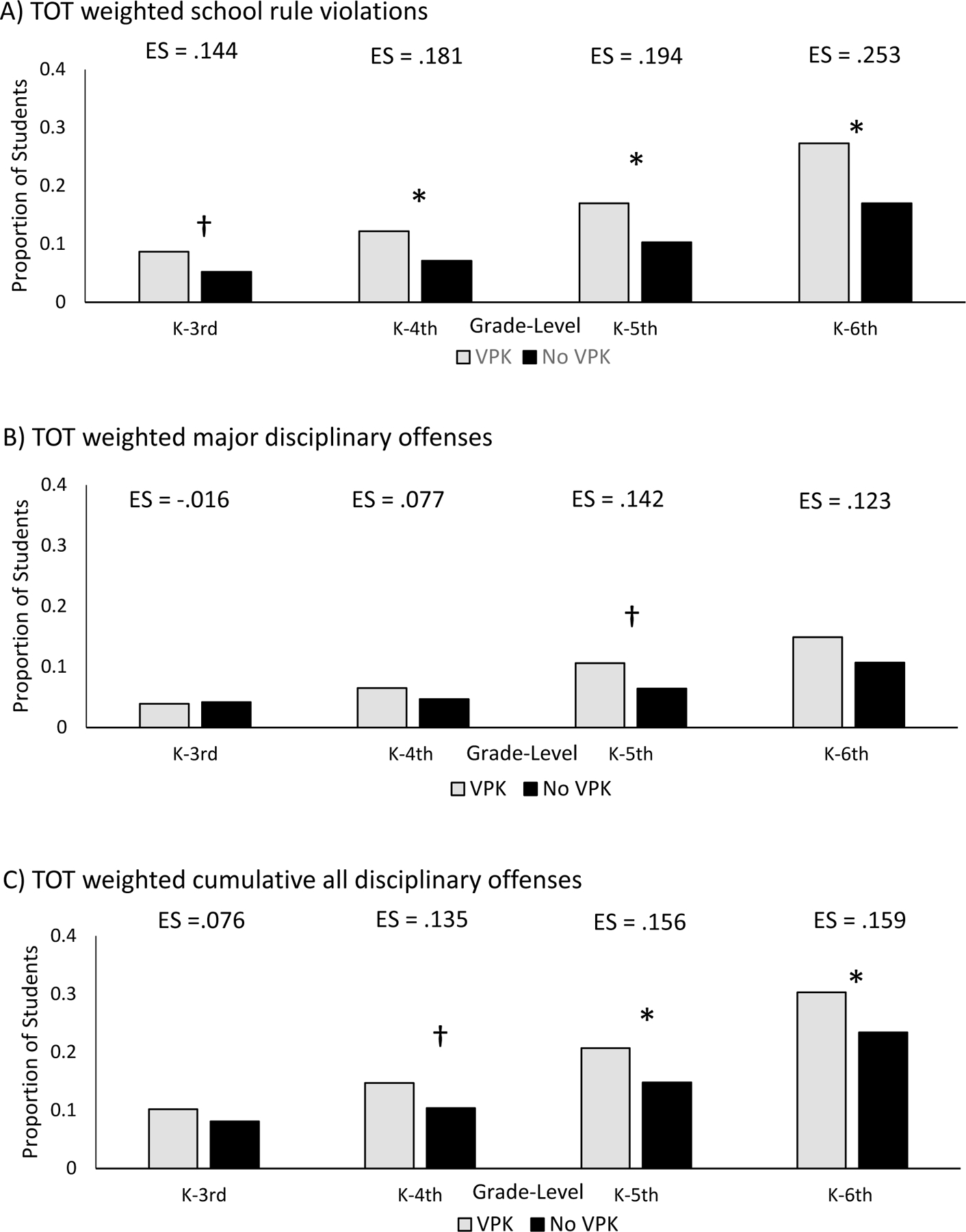
Charts from the Tennessee Voluntary PreK study showing both poorer academic performance and more behavioral problems for children who were enrolled in the Tennessee's state run preschool program. Citation: Durkin, K., Lipsey, M. W., Farran, D. C., & Wiesen, S. E. (2022). Effects of a statewide pre-kindergarten program on children's achievement and behavior through sixth grade. Developmental psychology, 58(3), 470–484. https://doi.org/10.1037/dev0001301
And even if TK were like the Perry and Abecedarian programs, the benefits they would provide for the average child might not be enough to justify their cost to every child. Children with involved parents, healthy food, and access to health insurance will probably be healthy, find jobs and stay out of jail. And in this case, preschool becomes another expensive and complicated answer when the simple answer is to hold parents accountable for raising their children and make sure families can access healthy food and healthcare. The kinds of intensive programs seen in the Perry Preschool and Abecedarian programs may not even be easily replicable because the chemistry of the team who created these projects is something you can’t necessarily clone and rollout everywhere. Sometimes an individual with a particular vision, creativity, and drive can accomplish a lot, but that vision, creativity, and drive can’t be planted in someone else’s mind and heart, even with a handbook and program. That being said, a targeted number of these types of high intensity preschool programs might be extremely helpful in very poor communities. However, even if we get a roll out of high intensity preschools, we have to ask if that’s enough to compensate for the weaknesses in public schools.
It’s no wonder that public preschool proponents love to talk about the Perry and Abecedarian Projects and avoid talking about the Tennessee Voluntary Pre-K program, even though the Tennessee Voluntary Pre-K program is pretty much what public preschool will offer, not the Perry Project and certainly not the Abecedarian Project. What we’re dealing with here are errors in research methodology on the part of the public preschool proponents. However, these research errors are cited as the basis for public funding.
Headstart is becoming another battleground as the federal government is shifting more of the burden of the program to states. While Robert F. Kennedy Jr.’s statement about the changes expresses great pride in the program and a desire to increase local and state involvement in running it, I have seen education news websites lamenting that if the states take more control over Headstart, the program will suffer and that poverty will become a bigger problem in already impoverished communities without a federally run Headstart. Meanwhile other states are trying to expand free preschool to younger children as well. Zohran Mamdani even brought Miss Rachel to a press conference about the expansion of public preschool in New York City. Public preschool expansion is very trendy, but for the most part no one is really questioning if it’s going to deliver on its promises of less crime and poverty and greater educational and career attainment. And if we’re all honest with ourselves, we know that the world would still go on just fine without expanded public preschool because our population had higher rates of educational achievement before government supported preschool.
One of the promises of universal preschool is that children will be better prepared for school, resulting in improvements in educational achievement. But the country’s literacy rates were actually higher before Headstart and TK. In 1930, the national illiteracy rate was about 4% (Snyder, 1993) . And in 1950, the rates of illiteracy varied across the country, census estimates place them at below 3% in two-thirds of states at the time and below 10% in all states for people 14 and older (United States Census Bureau, 1959). By 1979, the national illiteracy rate was 0.6% (Snyder, 1993).
As concerning as 10% illiteracy in some states would be, our current rates of illiteracy dwarf that. As of 2024, 21% of adults in the US are illiterate and of those who can read, 20% read below a 5th grade level. And “progressive” California is home to the country’s highest rate of adult illiteracy while New Mexico boasts the highest rate of child illiteracy. 34% of illiterate adults were born outside the US, but English learners don’t account for the two-thirds of adults who are born here and “educated” in American public schools (National Literacy Institute, 2025). It’s common for preschool proponents to bring up the benefits for preschool for English language learners, but it’s failing them as much, or possibly more, than other children as illiteracy rates show.
In other countries with high educational achievement, like Japan, preschool and kindergarten are, at least by some accounts, relatively newer Based on what I have been able to find on preschool and kindergarten in Japan, kindergarten hasn’t been the standard in Japan like it has in the US in the last forty or fifty years, but it is gaining in popularity. And in Japan lower grade levels sometimes only go to school for a half day (Elementary schools in Japan.) And many preschools in Japan are play schools with no academic instruction (Japanese preschools and kindergartens). So the lack of academic preschool doesn’t equate to higher academic achievement. In the United States, we have the idea that the more we put children in school, full day kindergarten and now full day TK, the better their academic achievement will be. We’re seeing the opposite, but we like the idea that more time in school will yield better results and it feels easier to put kids in school for longer than examining how we teach reading and enforce discipline in schools, so we keep doing it.
But we shouldn’t be too surprised by the lack of results because a great deal of educational policy and practice is based on how things sound rather than actual results. The whole word method of reading, for example, is based on the picture of kids cozying up with books and falling in love with reading is a practice that sounds good on paper but yields poor results in real life. Likewise, universal preschool sounds good on paper, but doesn’t yield the promised results.
Universal preschool is also a very convenient platform for politicians. It’s rarely questioned (and we the voting public won’t stand for any politician who does question it because saying “no” to any funding for schools is seen as denying an education to children), so it’s easy to implement, which then allows the politician to point to what they’ve done and tell us they value education. And we as the voting public vote these people into office despite the fact that the universal preschool didn’t create significant change. In many ways, we have ourselves to blame for the poor results we’re seeing.
I’m looking at the expectations and realities of preschool, and I am reminded of a quote by Horace Mann, the founding father of the public school system in America. In 1841, he declared that public schools are “‘the greatest discovery ever made by man,’ and if they were ‘worked with the efficiency’ of which they are capable:
‘nine tenths of the crimes in the penal code would become obsolete; the long catalogue of human ills would be abridged; men would walk more safely by day; every pillow would be more inviolable by night; property, life, and character held by a stronger tenure; all rational hopes respecting the future brightened’” (Agresti, 2023).
We have fallen into the trap with preschool that Horace Mann did with public schooling, believing it will solve crime and poverty and bestow our nation with peace and prosperity (one of the sources I found on the Perry Preschool Project was from a juvenile criminal justice publication touting preschool as a way to reduce juvenile crime)— which is a tall order for any type of schooling. Mann’s vision of a public school system came to pass, but it didn’t solve crime and poverty as he predicted it would. Almost two hundred years later, we’re hoping that preschool is some kind of missing link to a utopia that public education will usher in. Preschool has some benefits for some children, but by trying to imagine it can save the country, we are hobbling it and preventing it from doing the good it can do.
The results of research on preschool don’t point us toward universal preschool, rather they point to targeted early childhood education programs for high needs populations. Intensive preschool programs like the Perry and Abecedarian projects might be very helpful for families and communities at high risk, particularly because of the amount of parental engagement they foster. Publicly funded preschool could also be useful for some working families who need childcare. And these families that are the most at risk and are likely to have the strongest need are probably where the resources should be more focused. However, strengthening the academics and disciplinary practices and policies in our public schools and offering more targeted programs for behavioral and special needs students would help at risk children and their families immensely. We shouldn’t be looking at preschool as a way to solve the problems we should be addressing in our public schools. And lastly, if you are able to have your child stay home during the preschool years, don't feel that you need to send your child to preschool for fear of them falling behind. Preschool will not guarantee a successful life for your child, and conversely staying home from preschool won’t sentence your child to a life of crime and poverty. Research shows that keeping your child at home— or even sending them to daycare— instead of going to preschool is unlikely to disadvantage them in school compared to attending preschool. We as the taxpaying and voting public need to be aware of what preschool can and can’t do and how the resources for it are used if we want to actually see improvements.
References
Agresti, J. (2023 October 31). The average cost of public school education is 58 percent more than private school. Heartland Institute https://heartland.org/opinion/the-average-cost-of-public-school-education-is-58-percent-more-than-private-school/
Barnes, J. Conrad, K. Firming-Heinrich, C., Graziano, M., Kowalski, D., Neufeild, J., Zamora, J., and Palmquist, M. (2005). Generalizability and transferability. Colorado State University. https://writing.colostate.edu/guides/pdfs/guide65.pdf
Driessen, G. (2024) Abecedarian: An Impossible Model Preschool Program. Encyclopedia. Available online: https://encyclopedia.pub/entry/53693 (accessed on 31 July 2026).https://encyclopedia.pub/entry/53693
Elementary schools in Japan (n.d). In Wikipedia . Retrieved September 1, 2026 https://en.wikipedia.org/wiki/Elementary_schools_in_Japan
Frank Porter Graham Child Development Institute (2026 January 4). Mixed methods study revisits Abecedarian Intervention. https://fpg.unc.edu/news/mixed-methods-study-revisits-abecedarian-intervention
Japanese preschools and kindergartens. (n.d.) Education in Japan. https://educationinjapan.wordpress.com/resource-room/japanese-preschools-kindergartens/
Meloy, B., Gardner, M., and Darling-Hammond, L. (2019 January 18). Untangling the evidence on preschool effectiveness: Insights for policymakers. Funtime Academy. https://funtimeacademy.org/wp-content/uploads/2020/05/Untangling_Evidence_Preschool_Effectiveness_REPORT.pdf
National Literacy Institute (2025). Literacy statistics 2024-2025 (Where we are now).
https://www.thenationalliteracyinstitute.com/2024-2025-literacy-statistics
New York State (2026 August 4). Governor Hochul and Mayor Mamdni extend 2-K offers to more than 2,000 children. https://www.governor.ny.gov/news/governor-hochul-and-mayor-mamdani-extend-2-k-offers-more-2000-children
Snyder, T. ed (1993). Literacy from 1870 to 1979 in 120 Years of American Education: A statistical portrait. National Center for Educational Statistics. https://nces.ed.gov/naal/lit_history.asp
United States Census Bureau, (1959). Estimates of illiteracy, by states, 1950. https://www.census.gov/library/publications/1959/demo/p23-006.html
Wakabashi, T., Claxton, J., Melton-Grace, E., et al. (2025). What Happened During Teacher Visits? A Closer Look at the Parent Engagement Effort of the HighScope Perry Preschool Project. 54(2):1015-1026
DOI:10.1007/s10643-025-01895-x
Parks, G. (2000 October). High Scope Perry Preschool Project. Juvenile Justice Bulletin. Office of Justice Progrms. https://www.ojp.gov/pdffiles1/ojjdp/181725.pdf


No comments:
Post a Comment